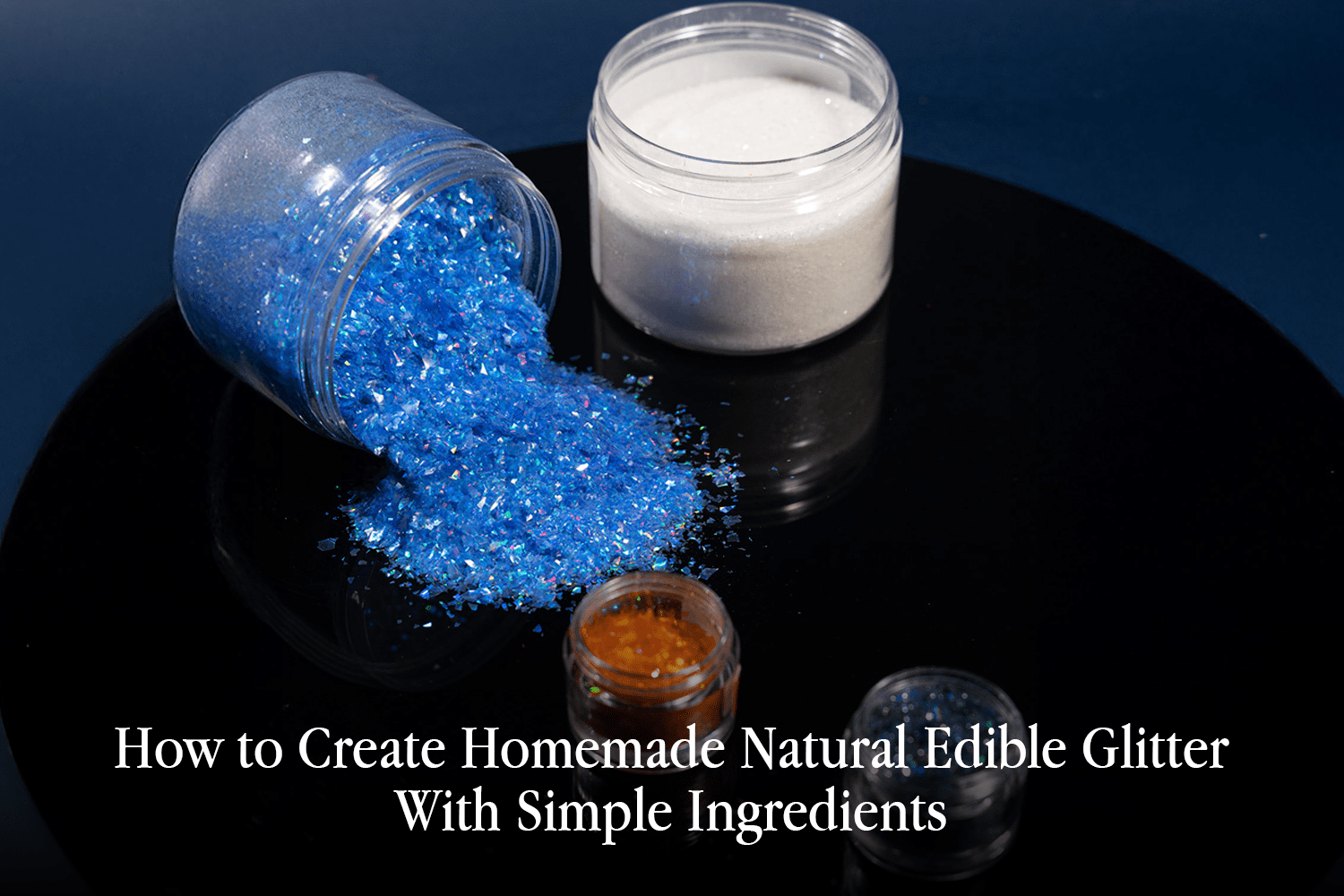
Homemade edible glitter is one of those ideas that sounds complicated but is actually very approachable with the right guidance. Whether you want to avoid store-bought products, prefer to know exactly what goes into your decorations, or simply enjoy the process of making things from scratch, creating homemade edible glitter at home is a genuinely satisfying baking project. For artisan bakeries and R&D teams exploring clean-label alternatives, it is also a useful starting point for understanding what natural shimmer ingredients can and cannot achieve.
That said, this guide will also be honest with you. Truly prismatic, holographic shimmer of the kind produced by professional food manufacturers is difficult to replicate at home. What you can create is a beautiful, natural, sugar-based sparkle that works wonderfully for cakes, cupcakes, cookies, and other desserts. And when made correctly, homemade edible glitter is completely safe, clean-label, and made from ingredients you can name.
Let’s get into it.
Homemade Edible Glitter: What It Is and Why Make It
Homemade edible glitter is a decoration made from food-safe ingredients, designed to add sparkle and shimmer to baked goods and desserts. The most common base ingredients are sugar, cornstarch, or a combination of the two, coloured with natural food-safe pigments and dried until they form sparkle-like crystals.
There are several good reasons to make your own. You have complete control over the ingredient list. You can tailor the colour to exactly match a party theme. You avoid synthetic additives entirely. And for parents who are particular about what goes into children’s food, knowing that every component is a recognisable kitchen ingredient provides real peace of mind.
It is also worth understanding the context. Many products labeled “non-toxic” are not food-grade, always verify edible certification before using any decoration product on food designed to be consumed. Making your own homemade edible glitter sidesteps that confusion entirely.
DIY Edible Glitter Recipe Using Sugar Crystals
This is the most accessible DIY edible glitter recipe and uses ingredients you likely already have at home.
What you need:
- 4 tablespoons of granulated white sugar
- 1 teaspoon of water or clear alcohol (such as vodka)
- Gel food colouring in your chosen shade (natural gel colours preferred)
- A baking sheet lined with parchment paper
Method:
Place your sugar in a small bowl. Add the water or alcohol a drop at a time, mixing thoroughly after each addition. You want the sugar to be just barely damp. Too much liquid will dissolve the sugar granules rather than coating them.
Add a small amount of gel food colouring and mix until the colour is distributed evenly throughout the sugar. The colour will look more intense at this stage than the finished product, so start lighter than you think you need.
Spread the coloured sugar in a thin, even layer across your lined baking sheet. Place in an oven set to the lowest possible temperature, around 80 to 100 degrees Celsius, and allow to dry for 10 to 15 minutes. Watch carefully. You want the moisture to evaporate, not the sugar to melt.
Remove from the oven and allow to cool completely before using. The result is homemade cake glitter with a satisfying crystalline sparkle and clean, natural colour.
How To Make Glitter For Desserts With Natural Coloring
When learning how to make glitter for desserts, the choice of colouring agent is what determines whether your product is truly natural or simply labelled that way.
Gel food colourings vary widely. Some are made from synthetic dyes. Others are plant-based and made from ingredients like beet root, turmeric, spirulina, or butterfly pea flower. Always check the ingredient list on your colouring before using it in a natural decoration project.
Natural gel colours tend to produce softer, more muted tones than synthetic versions. This is not a flaw. It is actually a beautiful characteristic of natural cake decoration. Dusty rose from beet, warm gold from turmeric, and soft teal from spirulina all have a depth and warmth that synthetic colours do not replicate.
For the most naturally coloured homemade edible glitter, consider using powdered fruit and vegetable pigments dissolved in a tiny amount of alcohol to create your own gel base. This takes a bit more preparation but gives you the cleanest possible ingredient list.
Plant-Based Edible Glitter Options
Plant-based edible glitter is about more than just the colour. It means every component of your decoration, from the base ingredient to the pigment, comes from a plant or food-safe mineral source.
Sugar is plant-based. Cornstarch is plant-based. Natural fruit and vegetable powders are plant-based. A homemade edible glitter recipe built from these components is as clean-label as decorations get.
This matters particularly if you are baking for vegans, for those with specific dietary requirements, or for children whose parents are mindful about additives. Being able to say “this decoration is made from sugar and beet powder” is a completely different conversation than reading a label with twelve ingredients you cannot pronounce.
Commercial plant-based edible glitter, such as the Magic Sparkles range, achieves its prismatic shimmer through a maltodextrin crystal structure that refracts light differently than sugar crystals can. This difference matters: sucrose crystals and maltodextrin matrices refract light in distinct ways, which is why professionally manufactured glitters achieve a deeper, more holographic shimmer than sugar-based homemade versions. Maltodextrin is derived from starch, making it fully plant-based, vegan certified, halal certified, and kosher certified. If you want the deepest shimmer effect alongside a fully plant-based ingredient list, this is worth knowing.
Using Fruit And Vegetable Powders For Natural Shimmer
Fruit and vegetable powders are one of the most underused tools in natural cake decoration. They are concentrated, intensely coloured, and made from nothing but dehydrated plant matter.
Here is a quick guide to the colours you can achieve:
- Pink and red: Beet root powder, strawberry powder, raspberry powder
- Yellow and gold: Turmeric powder, mango powder, lemon powder
- Blue and purple: Butterfly pea flower powder, blueberry powder, blackcurrant powder
- Green: Spirulina powder, matcha powder, spinach powder
- Orange: Carrot powder, pumpkin powder, paprika (for non-sweet applications)
To use these in a homemade edible glitter recipe, substitute the gel colouring in the sugar crystal method above with a half teaspoon of your chosen powder mixed with a few drops of clear alcohol to form a paste. Mix this paste into your damp sugar before drying. The result is a genuinely organic cake decorating approach with zero synthetic additives.
Organic Cake Decorating Ideas With Minimal Ingredients
The appeal of organic cake decorating ideas is not just about health. It is about simplicity, intentionality, and knowing exactly what you are serving. Here are some ideas that pair well with homemade edible glitter.
Beet and vanilla cupcakes with rose-tinted homemade glitter: Use beet powder in both the cupcake batter and the glitter for a cohesive, naturally pink presentation.
Lemon drizzle cake with turmeric gold shimmer: A golden yellow sugar glitter over a lemon icing has a warm, sun-lit quality that looks genuinely beautiful and uses only kitchen-cupboard ingredients.
Matcha layer cake with green shimmer: Matcha buttercream topped with a light scatter of spirulina-green homemade edible glitter creates a sophisticated, earthy aesthetic that has become popular for adult celebration cakes.
Each of these ideas uses the same base glitter technique. Only the colouring changes. Once you have mastered one colour of homemade cake glitter, every other colour follows the same method.
Baking-Safe Glitter Alternatives For Home Bakers
If you are looking for baking safe glitter alternatives beyond the sugar crystal method, there are a few other approaches worth knowing.
Coloured coarse sugar: Simply mixing coarse sugar crystals with natural gel colouring and allowing them to dry without baking gives you a less fine but very effective sparkle texture.
Edible lustre dust: Commercially available lustre dusts made from food-grade mica and natural colorings are a middle ground between fully homemade and fully commercial. Check that they carry edible certification and not just “non-toxic” labeling before using.
Freeze-dried fruit crumbles: Freeze-dried raspberries, strawberries, or mango crumbled finely have a natural glitter-like appearance and an intense natural colour. They do not shimmer in the same way but offer a beautiful natural texture.
Professional edible glitter: For occasions where you want the full prismatic effect without making it yourself, Magic Sparkles offers a clean-label alternative that is vegan, E171-free, and made from maltodextrin with natural plant-based colorings. It is genuinely edible in the way that handmade decorations are, with the shimmer quality that is difficult to achieve at home.
How To Store Homemade Cake Glitter Properly
Homemade edible glitter is sensitive to moisture in a way that professional products are engineered to resist. Proper storage is essential for maintaining quality.
Store your homemade cake glitter in a small airtight glass jar. Plastic containers can allow small amounts of moisture to pass through over time. Glass is a better barrier. Add a small food-safe silica sachet inside the jar if you live in a particularly humid climate or keep your kitchen warm.
Keep the jar away from direct sunlight. Natural colorings from fruit and vegetable powders are more susceptible to UV fading than synthetic dyes. A cool, dark cupboard is the ideal location.
Homemade edible glitter made from the sugar crystal method will typically keep well for two to three weeks if stored correctly. Beyond this, moisture from the air may begin to cause clumping or colour fading. Make small batches as needed rather than large quantities that will sit unused.
Common Mistakes When Making DIY Edible Glitter
A few simple errors account for most failed batches of DIY edible glitter.
- Adding too much liquid: The sugar needs to be barely damp, not wet. Too much water dissolves the granules before they can dry into glitter crystals.
- Setting the oven too high: Anything above 100 degrees Celsius risks melting or caramelising the sugar rather than simply drying it. Always use the lowest oven setting available.
- Not allowing it to cool completely: Homemade edible glitter applied to a cake while still warm can cause it to clump or stick together in uneven patches. Allow to cool fully on the tray before handling.
- Using liquid food colouring instead of gel: Liquid colouring adds too much moisture and changes the sugar-to-liquid ratio significantly. Always use gel or powder colouring for the most consistent result.
- Skipping the parchment paper: Sugar sticks to baking sheets when heated. Parchment paper makes removal easy and prevents waste.
Conclusion
Homemade edible glitter is a genuinely achievable and deeply satisfying project for anyone who loves baking with intention. The sugar crystal method is simple enough for a complete beginner and flexible enough for experienced bakers to adapt into complex, multi-coloured effects.
The most important thing to keep in mind throughout is ingredient quality. The whole point of making homemade edible glitter yourself is the ability to control what goes into it. Use natural colorings, keep your ingredient list short, and store your finished product properly for the best results.
And when you want the full prismatic effect for a really special occasion, professionally engineered edible glitter offers measurable performance advantages in scale, consistency, and shimmer brilliance that are difficult to match at home. Knowing that options like Magic Sparkles are made to the same natural, clean-label standard you are aiming for at home is genuinely reassuring. The goal, whether handmade or professionally made, is always the same: beautiful decoration that is completely safe to eat.
When you want the full prismatic effect for a special occasion, find out where to buy natural edible glitter that meets the same clean-label standard.
FAQ
Can you make edible glitter at home safely?
Yes. Homemade edible glitter made from sugar, a small amount of water or alcohol, and natural food-safe colouring is completely safe to consume. The key is using ingredients that are genuinely food-grade, keeping the ingredient list simple, and following safe drying temperatures to avoid burning or caramelising the sugar.
What natural ingredients can be used to make edible glitter?
Sugar or cornstarch forms the base. Natural colorings can come from gel food colours made with plant extracts, or from fruit and vegetable powders such as beet root, turmeric, spirulina, butterfly pea flower, and freeze-dried berry powders. These give you a genuinely organic cake decorating result with no synthetic additives.
Is homemade edible glitter safe for kids?
When made from simple food-safe ingredients like sugar and natural food colouring, homemade edible glitter is safe for children. It is significantly safer than decorative glitters made from polyester or plastic, which are sometimes marketed for use on food but are not designed to be digested.
How do you store homemade edible glitter to prevent clumping?
Store in a small airtight glass jar in a cool, dark cupboard away from direct sunlight. Adding a food-safe silica sachet inside the jar helps manage moisture in humid environments. Homemade cake glitter keeps best for two to three weeks when stored correctly.
Can homemade edible glitter be used on all desserts?
It works well on buttercream cakes, cupcakes, cookies, and fondant-covered cakes. Because it is sugar-based, it can dissolve if placed on a very wet surface or left in contact with moisture for a long period. It is best applied shortly before serving for the most stable results.