Posted on February 8, 2026
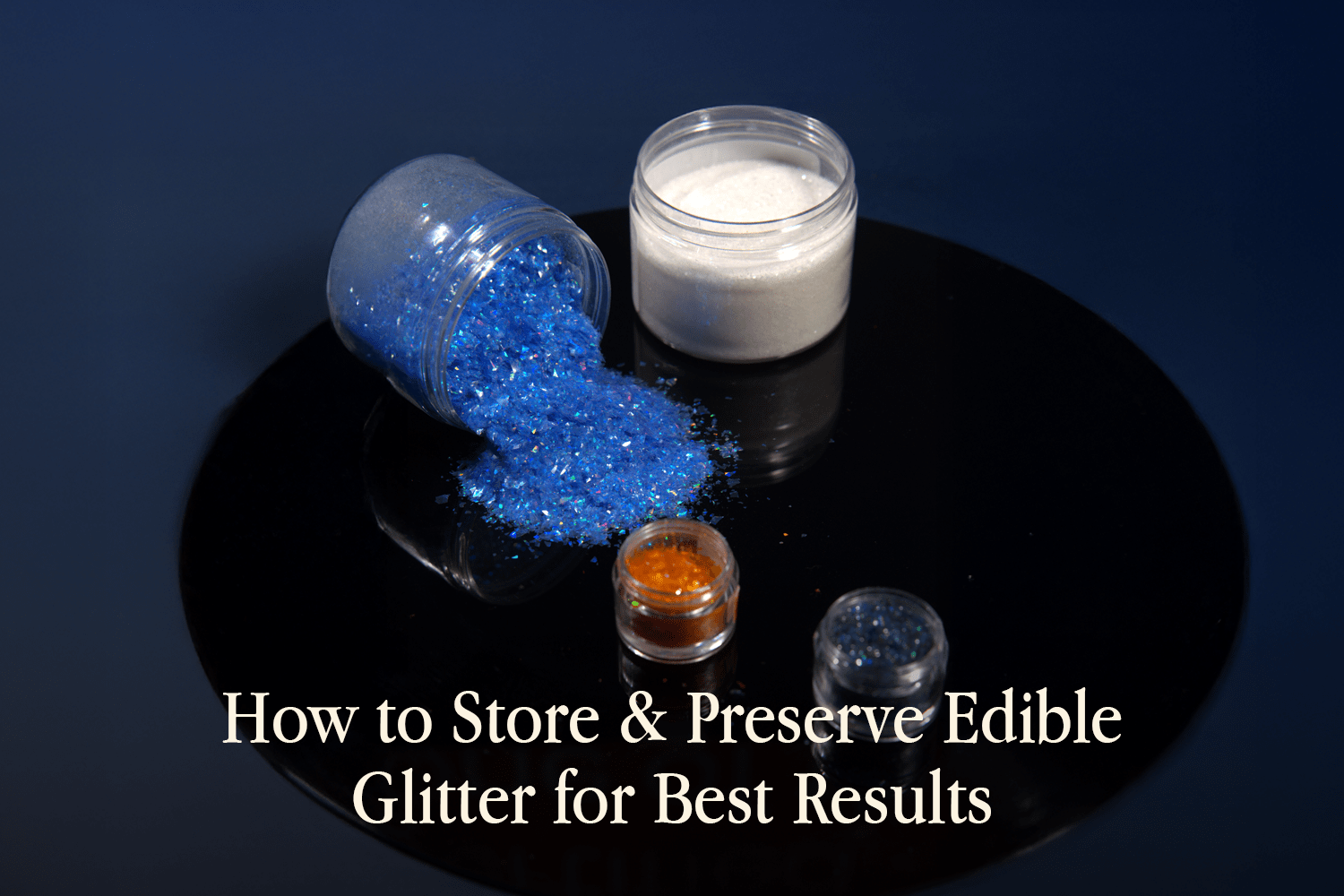
You’ve invested in premium edible glitter to create stunning cakes and desserts, but are you storing it correctly?
Proper storage practices make the difference between products that maintain their prismatic sparkle for years and those that clump, fade, or lose their magic within months.
Whether you’re a home baker with a few containers or a professional running a commercial kitchen, these storage practices will help you get maximum value from your bakery ingredient preservation efforts. Let’s ensure your sparkle stays spectacular.
Understanding storage requirements starts with knowing what these products are made of.
Quality edible glitter like Magic Sparkles is manufactured from maltodextrin, a plant-based carbohydrate that’s hygroscopic, meaning it naturally attracts and absorbs moisture from the air.
When exposed to humidity, these delicate crystals can stick together, lose their prismatic effect, or even dissolve partially.
Improper storage leads to:
Quality degradation: The holographic, jewel-like refraction that makes edible glitter special depends on intact crystal structure. Moisture disrupts this structure, creating a dull, clumped product instead of individual sparkling flakes.
Wasted money: Premium edible glitter isn’t cheap. A ruined container because of poor storage practices means literally throwing money away.
Contamination risks: Edible products require food-safe handling. Poor storage exposes your glitter to airborne contaminants, foreign particles, or cross-contamination from other ingredients.
Inconsistent results: Clumped or degraded glitter won’t distribute evenly on cakes, won’t create the visual impact you expect, and can ruin otherwise perfect creations.
Professional bakers know that proper storage for cake decorations isn’t optional; it’s essential for consistent, professional results every single time.
Ideal temperature and humidity conditions
The environment where you keep your supplies dramatically impacts edible glitter shelf life and performance.
Temperature requirements:
Store edible glitter at cool room temperature, ideally between 60-75°F (15-24°C). Avoid temperature fluctuations that cause condensation inside containers.
Never refrigerate or freeze edible glitter. Cold storage seems logical for food products, but the temperature differential when you remove containers causes moisture to condense on the product surface. This defeats the entire purpose of humidity-proof sparkle storage efforts.
Heat isn’t ideal either. Temperatures above 80°F (27°C) can cause certain natural colorants to degrade faster, affecting vibrancy over time.
Humidity control:
This is critical. Relative humidity should stay below 60% in your storage area. Above this threshold, moisture absorption accelerates exponentially.
In humid climates or during summer months, consider:
The UK’s naturally humid climate makes this especially important for extending decorative powder lifespan. Magic Sparkles products are manufactured in Nuneaton with this in mind, but proper storage remains your responsibility once containers are opened.
Choosing the right containers for storage
Your container choice is fundamental to how to keep sparkle powder fresh long-term.
Original packaging considerations:
Magic Sparkles containers are designed specifically for maintaining freshness. They feature:
Keep products in original containers whenever possible. Transferring to decorative jars might look prettier, but it often compromises storage quality.
If transferring is necessary, use:
Avoid metal containers that can react with natural colorants. Never use containers that previously held non-food items; even if thoroughly washed, residual odors or chemicals can contaminate edible products.
Protecting glitter from moisture and contamination
Moisture is the primary enemy of long-lasting sparkle, but contamination poses equally serious risks.
Preventing clumping in decorative dust:
Moisture causes maltodextrin crystals to bond together. Once this happens, you can’t simply shake containers to separate particles; the bonds are permanent.
Prevention strategies:
Contamination prevention:
Edible glitter is food. Treat it with the same respect you give flour, sugar, or any ingredient that goes into someone’s mouth.
Dedicated scoops or spoons for each color prevent cross-contamination of shades. Never dip fingers directly into containers; skin oils introduce moisture and bacteria.
Clean, dry workspace when handling products. Flour dust, cocoa powder, or other airborne particles can settle into open containers.
Proper storage for cake decorations means keeping them separate from raw ingredients or anything that could introduce allergens if you serve allergen-free products.
Shelf life and signs of quality loss
Understanding food-safe glitter expiration helps you recognize when products are past their prime.
Typical edible glitter shelf life:
Unopened containers stored correctly last 2-3 years or more. The maltodextrin base is remarkably stable when protected from moisture.
Opened containers maintain peak quality for 12-18 months when stored according to these guidelines.
Magic Sparkles prints manufacturing dates on containers. While there’s no hard expiration date for properly stored products, we recommend using opened containers within two years for optimal visual impact.
Signs your glitter has degraded:
Clumping: Individual flakes stick together in chunks rather than flowing freely. This is the most obvious indicator of moisture exposure.
Color fading: Natural plant-based colorants gradually lose vibrancy over extended periods, especially if exposed to light. If your Rose Quartz shade looks washed out compared to when you first opened it, quality has declined.
Dull appearance: Fresh edible glitter has a brilliant, prismatic sparkle. The degraded product looks flat and lacks that holographic shimmer.
Off odors: Maltodextrin should smell neutral or slightly sweet. Any musty, stale, or unusual odors indicate contamination or degradation.
If you notice these signs despite proper storage efforts, it’s time to replace your stock.
Handling practices for commercial kitchens
Professional bakeries have unique challenges for storing shimmer dust correctly at scale.
Volume considerations:
Commercial operations often buy larger quantities to reduce per-unit costs. However, this creates bakery ingredient preservation tip challenges:
Decant into working portions: Keep a small container (100-200g) at your decorating station for daily use. Store bulk quantities separately in ideal conditions.
Label everything: Include opening dates, color names, and batch numbers. When managing multiple containers, clear labeling prevents mix-ups.
First-in, first-out rotation: Position older stock at the front. This extends decorative powder lifespan by ensuring nothing sits unused until it degrades.
Staff training:
Everyone who handles edible glitter must understand proper storage for cake decorations:
Storing opened vs unopened containers
Storage practices differ significantly based on whether containers have been opened.
Unopened containers:
These maintain factory seals that provide superior protection. Store them:
Unopened products have the longest edible glitter shelf life because you haven’t introduced any external air or moisture.
Opened containers:
Once you break the factory seal, how to keep sparkle powder fresh becomes active rather than passive:
Consider purchasing smaller container sizes if you use products infrequently. A 3g pot that you use within months will maintain better quality than a 30g pot that sits half-empty for two years.
Avoiding color fading and clumping
Two specific problems require targeted solutions for extending decorative powder lifespan.
Preventing color fading:
Natural plant-based colorants, the hallmark of quality edible glitter are more light-sensitive than synthetic dyes.
Light protection strategies:
Certain colors fade faster than others. Reds and pinks (from beetroot) show fading first. Blues and greens (from spirulina) tend to be more stable. Metallics like gold and silver using mineral pigments rarely fade.
Preventing clumping in decorative dust:
We’ve mentioned this throughout, but it deserves dedicated attention because it’s the most common storage failure.
Anti-clumping practices:
If slight clumping occurs, you can sometimes salvage products by gently breaking up clumps with a dry fork. Severe clumping indicates moisture saturation and means the product should be replaced.
Storage mistakes that affect performance
Even experienced bakers make these common errors that compromise ingredient quality.
Storing near heat sources: Placing containers near ovens, stovetops, or under bright lights creates temperature fluctuations and accelerates degradation.
Storing with pungent ingredients: Edible glitter can absorb odors from vanilla extract, essential oils, or strong spices if stored in close proximity.
Overfilling containers: Leave headspace at the top. Cramming containers full damages crystal structure and makes it difficult to scoop product without contamination.
Ignoring warning signs: Continuing to use visibly clumped or faded products produces substandard results. Replace degraded stock promptly.
Using non-food-grade containers: Craft supply containers may leach chemicals or fail to provide proper seals for proper storage for cake decorations.
Understanding these pitfalls helps you develop bakery ingredient preservation tips that actually work in real-world kitchen environments.
Conclusion
Learning how to store and preserve edible glitter correctly protects your investment and ensures every creation sparkles with professional brilliance.
The keys are simple: control moisture through humidity-proof sparkle storage, use appropriate airtight containers for baking supplies, maintain stable temperatures, and handle products with food-safe practices.
Understanding edible glitter shelf life expectations, 2-3 years unopened, 12-18 months opened, helps you plan purchases and rotate stock effectively.
Recognizing signs of quality loss like clumping or fading allows you to maintain standards rather than compromising on an inferior product.
Whether you’re preventing clumping in decorative dust at home or implementing bakery ingredient preservation tips across a commercial kitchen, these practices deliver consistent results.
You’ll extend decorative powder lifespan, reduce waste, and ensure every sprinkle creates that prismatic, jewel-like effect that makes edible glitter magical.
Magic Sparkles products are manufactured from pharmaceutical-grade maltodextrin and natural plant-based colorants in SALSA-approved facilities.
When you combine our commitment to quality with proper storage for cake decorations, you get products that perform beautifully from first sprinkle to last.
Store smart. Sparkle brilliantly. Create with confidence, knowing your ingredients are as fresh and vibrant as the day they were manufactured.
Quality edible glitter doesn’t truly “expire” like perishable foods, but it can degrade without proper storage. The typical edible glitter shelf life is 2-3 years unopened and 12-18 months opened. Signs of degradation include clumping, color fading, or loss of prismatic sparkle.
No. Refrigeration is one of the worst things for how to keep sparkle powder fresh. Temperature changes cause condensation, introducing moisture that causes severe clumping. Store edible glitter at cool room temperature (60-75°F) in humidity-proof sparkle storage conditions instead.
Clumping occurs when moisture bonds maltodextrin crystals together.
Common causes include humid storage environments, using wet utensils, working over steaming cakes with open containers, or failing to use an airtight container for baking supplies. Prevention requires strict moisture control.
Absolutely. Humidity is the primary threat to food-safe glitter expiration and quality. Relative humidity above 60% accelerates moisture absorption, making preventing clumping in decorative dust nearly impossible.
Use dehumidifiers, silica packets, and sealed containers for proper storage for cake decorations in humid climates.
Opened containers maintain peak quality for 12-18 months with correct storage practices. Extending decorative powder lifespan beyond this requires excellent storage conditions. Always close containers immediately after use, keep them in cool, dry locations, and follow bakery ingredient preservation tips like using dry utensils only.


