Edible Glitter vs Sparkles: Differences, Uses and Food Safety Explained
Posted on 5th June 2026
7 Min read
Pick up two pots of cake decoration from a baking supplies shelf and the labels will use the terms interchangeably. One says edible glitter. One says sparkles. Both catch the light beautifully in the shop. But when you understand the difference between edible glitter vs sparkles, the choice you make at the till starts to matter rather more.
What Is Edible Glitter?
Edible glitter is a fine, prismatic decoration made from food-grade ingredients, typically maltodextrin derived from starch, combined with natural plant-based colourings. It dissolves in the stomach and metabolises as food. Truly edible glitter, such as the range made by Magic Sparkles in Nuneaton, Warwickshire, contains no plastics, no E171 (Titanium Dioxide), and no synthetic additives. When people search for edible glitter for cakes, this is the category they should be buying from, even if the labelling on the shelf makes that harder than it should be.
What Are Cake Sparkles?
Cake sparkles, in the Magic Sparkles range, refer to a specific product format: larger, chunkier pieces of the same maltodextrin-based formula, designed to catch light differently from fine glitter. In general retail use, the term sparkles is applied more loosely, and this is where confusion begins. Some products sold as sparkles are polyester-based decorations that are non-toxic but not genuinely edible. They pass through the digestive system without harm but are not food. Understanding edible glitter vs sparkles means understanding this distinction first.
Edible Glitter vs Sparkles: Key Differences
The edible glitter differences that matter most are particle size, ingredient base, and what happens inside the body. Fine edible glitter delivers an all-over shimmer. Sparkles, at their chunkier size, create a more jewel-like, faceted effect. Both, when made correctly from food-grade ingredients, are safe to consume. The problem arises when sparkles are made from polyester glitter sold under a food-adjacent label. Not all sparkles are safe to eat, and the ingredient list is the only reliable way to tell.
Related Reading: Edible Glitter vs Luster Dust: Which to Use for Cakes, Cookies and Cocktails
Ingredients Used in Food Glitter and Sparkles
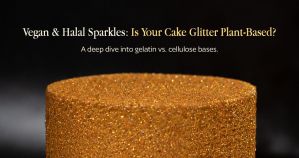
Food glitter vs sprinkles, food glitter vs sparkles, sparkles vs luster dust: the comparisons multiply quickly. The clearest way to cut through is to read the ingredients panel. Truly edible decorations will list maltodextrin, mica (a naturally occurring mineral approved for food use), or starch-based carriers alongside approved food colourings. Polyester will appear as such on the label, or the product will carry the phrase “for decorative purposes only.” Magic Sparkles products are certified by the Vegan Society, approved by the Halal Monitoring Committee, and kosher-certified by Manchester Beis Din, certifications that confirm the ingredient standard behind every pot.
Which Decoration Works Best for Cakes?
For a buttercream finish, fine edible glitter distributes evenly and catches light across the whole surface. Cake sparkles vs glitter on fondant produces a different effect: the larger sparkle particles sit proud of the surface and create individual points of light rather than a general shimmer. Both are valid choices. The right one depends on the finish you want, not on a hierarchy of quality.
Types of Edible Glitter Used in Baking
The main types of edible glitter available in a baking glitter guide break down as follows:
- Fine dust glitter: The most versatile format for edible cake decorations. Works across buttercream, fondant, chocolate, and drinks.
- Chunky sparkles: Larger particles for statement effects on celebration cakes and desserts.
- Holographic glitter: Prismatic particles that shift colour in different light conditions.
- Coloured glitter: Available across the full spectrum, using natural plant-based colourings.
When to Use Cake Sparkles Instead of Glitter
Use sparkles when you want a finish that reads as individual detail rather than overall shimmer. A five-tier Cotswolds wedding cake dusted in fine glitter reads as ethereal. The same cake finished with chunky sparkles at the base of each tier creates deliberate, architectural decoration. For school bake sale traybakes or birthday cupcakes, sparkles give a bold, celebratory effect that suits the occasion without requiring a delicate hand.
Are All Cake Decorations Safe to Eat?
No. This is the most important answer in any baking glitter guide. Products sold as “non-toxic” are not the same as truly edible. Non-toxic means a substance will not poison you; it does not mean it metabolises as food. Magic Sparkles has never used E171 (Titanium Dioxide), a first-mover position in a market that is still catching up. For a full explanation of why the distinction matters, the piece on edible vs non-toxic glitter sets it out clearly.
Best Uses for Edible Glitter in Desserts and Drinks
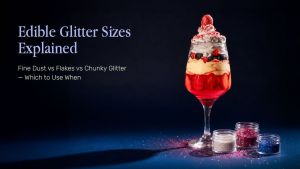
Decorating glitter for desserts works beautifully on trifle cream layers, dusted over chocolate, stirred into prosecco, and applied to the rim of cocktail glasses. Fine edible glitter disperses in liquid without clumping when the formula is correct, making it one of the most versatile decorating tools in a baker’s kit. The certified edible glitter by Magic Sparkles range covers both fine and chunky formats across a full colour palette, all carrying Vegan Society and Halal Monitoring Committee certification.
Common Mistakes When Buying Baking Glitter
The most frequent error is treating “non-toxic” as equivalent to “edible.” The second is buying on price without checking the ingredient list. The third is assuming that all products labelled as edible cake decorations carry the same regulatory standard. They do not. SALSA (Safe and Local Supplier Approval) accreditation, as held by Magic Sparkles’ Nuneaton facility, is a manufacturing standard worth looking for when assessing supplier credibility.
How Professional Bakers Use Glitter and Sparkles
Professional bakers typically stock both formats: fine glitter for an all-over finish and sparkles for specific detail work. Edible glitter vs sparkles is not a competition; it is a palette. The decision is made based on the cake, the occasion, and the light conditions in which the finished bake will be seen and photographed. For bakers ready to explore the full range, where to buy food-grade edible glitter and sparkles lists stockists across the UK.
Conclusion
Edible glitter vs sparkles comes down to particle size, ingredient base, and what the product is genuinely made from. Both can be beautiful, both have their place in a well-stocked baking kit, and both are worth understanding before you buy. The label is never enough. The ingredient list is.
Frequently Asked Questions
What is the difference between edible glitter and sparkles?
Edible glitter is a fine, prismatic decoration. Sparkles are a chunkier particle format. Both can be truly edible when made from food-grade maltodextrin and natural colourings, as Magic Sparkles products are. The edible glitter differences between formats are primarily visual.
Are cake sparkles safe to eat?
Cake sparkles made from food-grade ingredients are safe to eat. Polyester-based sparkles sold as “non-toxic” are not food. Always check the ingredient list before use.
Which is better for cakes, glitter or sparkles?
Neither is superior. Fine glitter suits all-over shimmer finishes. Sparkles suit statement, jewel-like detail work. The right choice depends on the finish you want.
Can edible glitter be used on drinks?
Yes. Fine edible glitter dissolves cleanly in prosecco, cocktails, and other drinks when made from the correct food-grade formula. It is one of the most popular uses for decorating glitter for desserts and drinks.
Are all baking glitters food grade?
No. Many products sold alongside baking glitter are polyester-based and non-toxic but not food. Only products made from food-grade ingredients and carrying relevant certifications are truly edible cake decorations.