Edible Glitter vs Luster Dust: Which to Use for Cakes, Cookies, and Cocktails
Posted on 11th February 2026
7 Min read
When you’re reaching for bakery decorating supplies to add shimmer to your latest creation, the choice between edible glitter vs luster dust can feel confusing. Both promise sparkle, but they deliver dramatically different effects, and knowing which to use can make or break your design.
Whether you’re finishing a wedding cake, decorating sugar cookies, or rimming champagne flutes, understanding the edible glitter vs luster dust debate helps you achieve professional results every time. Let’s break down exactly when to reach for each product.
Table of Contents
What Edible Glitter Is Used For In Food Decoration
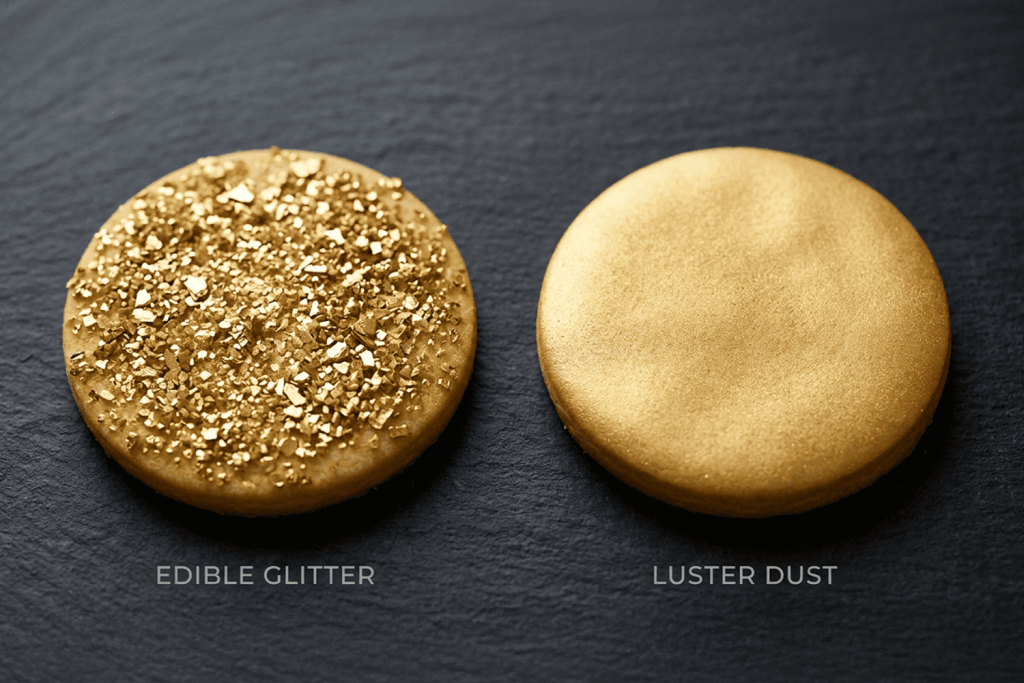
Edible glitter creates bold, prismatic sparkle that catches light from every angle. Think jewel-like flakes that shimmer as your cake rotates or guests move around the table.
True edible glitter is made from maltodextrin, a plant-based carbohydrate that dissolves in your stomach just like any other food. Quality products like Magic Sparkles use pharmaceutical-grade maltodextrin combined with natural plant-based colorants to create those gorgeous holographic effects.
So what is the difference between edible glitter and edible sparkles? Edible sparkles is simply a broader term for the same category; both refer to food-grade, dissolvable shimmer products, with glitter typically describing larger prismatic flakes and sparkles sometimes used for finer varieties.
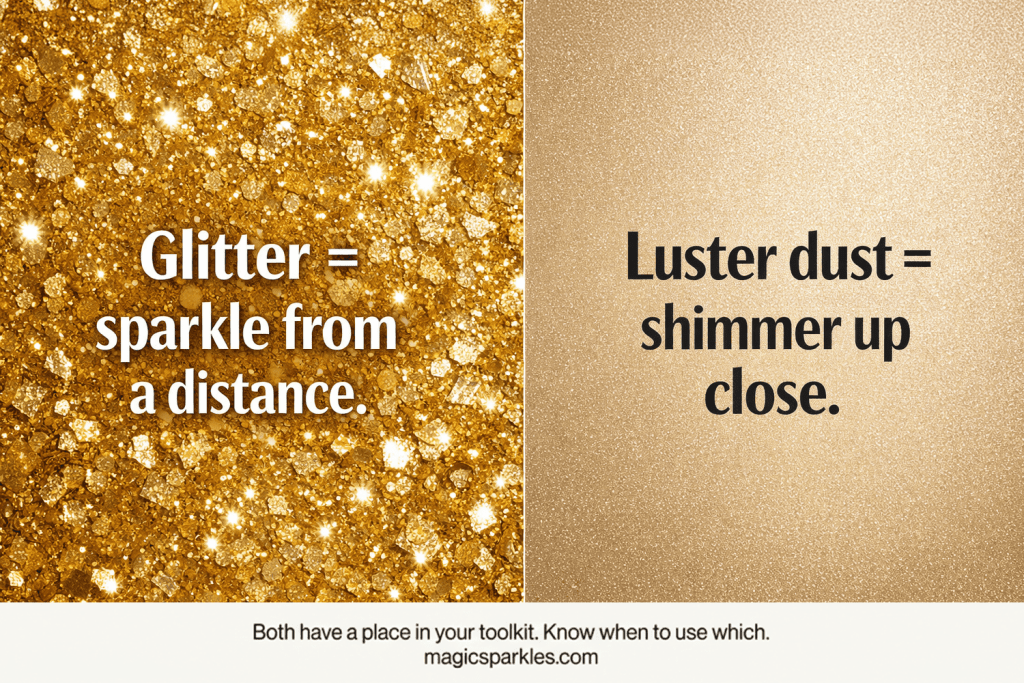
You’ll reach for edible glitter when you want drama and dimension. It’s perfect for birthday cakes that need that “wow” factor, wedding cakes where light refraction creates romance, cake pops and donuts where coverage needs to be visible from a distance, and prosecco and cocktails where floating sparkle adds celebration.
What Luster Dust Is And How It’s Typically Applied
Luster dust takes a completely different approach. This ultra-fine powder creates subtle shimmer rather than obvious sparkle; think elegant sheen instead of disco ball.
When comparing edible glitter vs luster dust, the particle size difference is everything. Luster dust is milled to an almost powdery consistency, which means it adheres differently and creates softer visual effects.
It works by coating surfaces with a thin layer of shimmer, commonly applied by dry brushing onto fondant or gum paste flowers, mixed with clear alcohol to paint metallic finishes, or dusted lightly over royal icing for a subtle gleam.
Professional bakers love luster dust for cookies and sugar flowers because it creates that painted, hand-finished look you see in boutique bakeries. When you compare different types of edible luster dust for chocolate work, mica-based varieties deliver the smoothest metallic finish, while pearl-tone dusts give chocolate a soft iridescent glow that looks naturally luxurious
Key Differences In Ingredients And Finish
The edible glitter vs luster dust conversation starts with understanding what these food grade sparkle products are actually made of.Edible glitter ingredients: maltodextrin base from corn, potato, or rice; natural plant-based colorants; modified starches for structure; and gum arabic or similar natural binders.
Luster dust composition: mica-based minerals or food-grade pigments, iron oxides and other approved colorants, and an extremely fine particle size for smooth application.
The finish these ingredients create differs significantly. Edible glitter gives you prismatic, holographic sparkle with visible flakes that catch light dramatically. Luster dust provides a metallic sheen or pearlescent glow that looks more like it’s part of the surface itself. Think of it this way: edible glitter says “Look at me!” while luster dust whispers “Notice my elegance.”
How Each Performs On Cakes And Cupcakes
When deciding between edible glitter vs luster dust for cakes, consider your frosting type and desired effect. For buttercream frosting, edible glitter is the best shimmer choice. Buttercream’s soft, textured surface gives glitter flakes something to nestle into while still catching light. Simply sprinkle over freshly frosted cakes for instant impact.
Luster dust on buttercream requires mixing with clear alcohol to create a paint-like consistency before brushing on for metallic cake finish techniques.
For fondant-covered cakes, luster dust truly shines. The smooth, dry surface is perfect for dry brushing to create seamless metallic effects in rose gold, champagne, or copper. Edible glitter works on fondant too but creates a different look, more like scattered jewels than an all-over glow. Both are valid depending on your design vision.
Suitability For Cocktails And Drink Rims
The edible glitter vs luster dust debate takes an interesting turn when it comes to beverages. For sparkle powder in cocktails, edible glitter wins decisively. Real maltodextrin-based edible glitter is designed to interact with liquids; drop flakes into prosecco or champagne and they create swirling, shimmering effects as they slowly dissolve.
Luster dust is not suitable for drinks as mica-based particles don’t dissolve properly and can create an unpleasant texture.
Magic Sparkles edible glitter is specifically formulated to be safe in beverages, dissolving naturally and metabolizing as food. Never compromise on food-safe decorative options when guests will be consuming your creations.
Food Safety And Labeling Differences
Understanding food safety is crucial when evaluating edible glitter vs luster dust.
True edible glitter made from maltodextrin is genuine food and should carry certifications like FDA approval, vegan, kosher, and halal status, and SALSA or BRC manufacturing approval. Be aware that many products called “edible glitter” are actually plastic polyester labeled “non-toxic,” which passes through your digestive system unchanged.
The same vigilance applies to luster dust; quality products specify food-grade mica and approved colorants, while lower-grade versions are labeled “for decoration only” rather than edible. Note that disco dust, sometimes mistaken for a luster dust alternative, is plastic, not food, and should never be used on cakes meant to be eaten.
Choosing The Right Option Based On The Final Look
Choose edible glitter when you want dramatic, eye-catching sparkle visible from a distance, prismatic holographic effects, shimmer that moves in beverages, or quick application without mixing or painting.
Choose luster dust when you want subtle sophisticated shimmer, smooth metallic finishes that look painted on, realistic effects on sugar flowers, or detailed shading and highlighting on fondant.For many projects, using both strategically creates the best results. Apply luster dust for base metallic tones, then add edible glitter accents for pops of drama.
Conclusion
The edible glitter vs luster dust debate isn’t about which product is better; it’s about which serves your specific creative vision. Edible glitter delivers bold prismatic sparkle best for cakes, cocktails, and cookies where unmistakable shimmer is the goal, while luster dust creates elegant metallic finishes ideal for detailed decorative work.
Magic Sparkles offers truly edible glitter made from pharmaceutical-grade maltodextrin and natural plant-based colorants, never plastic, never titanium dioxide, certified vegan, kosher, and halal. Whichever finish you choose, always source from certified, compliant bakery decorating supplies to protect both your creations and your customers.
What is the difference between edible glitter and edible sparkles, and which is best for cake decorating?
Edible glitter and edible sparkles refer to the same category of food-grade, dissolvable shimmer products. Glitter typically describes larger prismatic flakes for bold coverage, while sparkles can refer to finer varieties for subtler effects. For cake decorating, edible glitter made from maltodextrin is best when you want visible, holographic drama; luster dust is better for refined metallic finishes.
Which sparkle works better on fondant?
Luster dust typically performs better on fondant because its ultra-fine particles adhere smoothly to the dry surface, creating seamless metallic finishes. Edible glitter excels as accent sparkle for dimensional effects on fondant rather than all-over coverage.
Can I use shimmer powder in drinks?
Only true edible glitter made from maltodextrin is safe and effective in beverages. Luster dust is not suitable for cocktails as it doesn’t dissolve properly. Always verify your sparkle powder for cocktails is genuinely food-grade, not just “non-toxic.”
How do I compare different types of edible luster dust for chocolate?
When comparing different types of edible luster dust for chocolate, mica-based varieties deliver the smoothest metallic finish and adhere well to tempered chocolate surfaces. Pearl-tone dusts give a softer iridescent glow, while gold and bronze shades work best dry-brushed directly onto set chocolate for a professional hand-finished look.
Are edible glitter and luster dust interchangeable?
No. Edible glitter creates visible sparkle and works in liquids, while luster dust provides subtle shimmer and metallic coatings on dry surfaces. Using food-safe decorative options correctly means understanding which product suits your specific application rather than treating them as substitutes.