


Table of Contents
Gold vs Silver Edible Glitter: Why The Colour Choice Matters
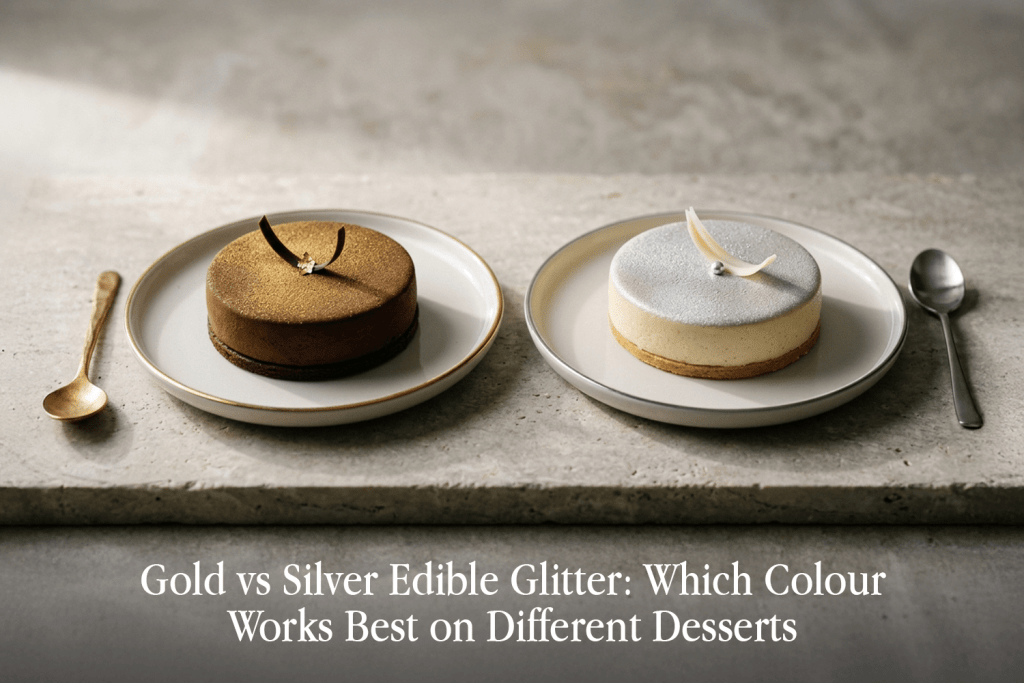
Gold vs silver edible glitter is one of those decisions that looks simple on the surface but actually shapes the entire mood of a dessert.
The metallic you choose communicates something before anyone takes a bite. Gold reads as warm, celebratory, and indulgent. Silver reads as cool, modern, and refined. Neither is better in isolation. Both are better in the right context.
For bakers trying to deliver a specific aesthetic, understanding the difference between gold vs silver edible glitter is genuinely useful. It is not just a style preference. It is a design decision that affects how the finished cake photographs, how it fits the occasion, and how much the client loves the result.
What Gold Edible Glitter Looks Like On Different Surfaces
Gold edible glitter for cakes performs differently depending on the base it sits on. On white or ivory buttercream, gold appears rich and warm with strong contrast. On ivory fondant, it creates that classic gilded effect that reads as luxurious in photographs.
On light-coloured sponge or naked cake layers, gold glitter catches natural light beautifully without overpowering the overall look. It adds warmth rather than drama, which suits relaxed celebration styles like rustic or boho aesthetics.
On dark chocolate surfaces, gold edible glitter for cakes is genuinely stunning. The contrast is sharp, the shimmer pops, and the result looks expensive with very little effort. Even a light dusting delivers high impact on a dark ganache. Think of a gold-dusted truffle box or a dark chocolate drip cake finished with gold flakes. That combination sells itself.
Related Reading: Learn exactly how to work with edible glitter on chocolate for the best results.
How Silver Shimmer Performs On Cakes, Chocolate And Fondant
Silver shimmer for desserts creates a completely different atmosphere. Where gold is warm, silver is architectural. It suits clean lines, modern cake designs, and colour palettes built around white, grey, black, and deep jewel tones.
On white fondant, silver glitter adds dimension without adding colour. It keeps the palette cool and crisp, which works particularly well for winter weddings, corporate events, and contemporary aesthetic styles.
Metallic shimmer for chocolate in silver reads differently to gold. On dark chocolate, silver can feel slightly stark unless balanced with other design elements. On milk chocolate or white chocolate, silver shimmer creates a beautiful moon-like effect that photographs exceptionally well under cool-toned lighting.
Silver glitter on fondant is also a favourite for geometric and minimalist cake designs. If you are working with sharp-edged tiers, marble effects, or abstract painted panels, silver tends to complement the structure rather than compete with it.
Explore minimalist cake decoration trends where silver shimmer plays a leading role.
Metallic Cake Decoration Comparison: Matching the Finish to the Occasion
The right metallic choice becomes much clearer once you anchor it to the event itself rather than personal preference alone.
Gold suits warmth, celebration, abundance, and tradition. Think milestone birthdays, anniversary cakes, Christmas desserts, Diwali sweets, and anything with a maximalist or vintage brief. In practice, a decorator briefed on a 50th birthday cake for a client who loves classic elegance will almost always land on gold. It photographs warmly, flatters traditional colour palettes, and delivers the sense of occasion that milestone celebrations call for.
Silver suits precision, elegance, and modernity. Think New Year’s Eve, winter weddings, corporate event cakes, and contemporary gallery-style dessert tables. A decorator working on a corporate hospitality brief, where the client wants something sophisticated and on-brand rather than overtly celebratory, will typically find silver fits without needing to justify the choice. It reads as considered and restrained in exactly the way those briefs require.
Gold Edible Glitter For Wedding Cakes And Luxury Desserts
Gold edible glitter for cakes has been a consistent favourite for years and shows no sign of slowing. It pairs naturally with ivory, champagne, blush, and terracotta colour palettes. It works across a wide range of styles, from traditional tiered designs to relaxed semi-naked cakes with organic textures.
For luxury dessert tables, gold edible glitter creates cohesion. A dusting of the same gold across macarons, cake pops, and the main centrepiece ties the whole table together without the need for complex decoration.
Gold vs silver edible glitter on a wedding brief almost always leans gold unless the client specifically requests a cooler palette. It is the safer starting point for traditional clients and the more dramatic choice for maximalist ones.
See where gold fits within luxury cake design trends 2026.
Silver Glitter On Fondant And Modern Cake Designs
Silver glitter on fondant is having a genuine moment in contemporary cake design. As more bakers move toward sculptural, architectural, and monochrome aesthetics, silver has become the go-to metallic for forward-thinking work.
Silver shimmer for desserts also performs beautifully in social media content. Under studio lighting or natural window light, silver creates a high-contrast, editorial finish that photographs like a magazine shoot.
For bakers working with modern briefs, silver glitter on fondant delivers exactly the kind of refined, gallery-ready result that clients share widely.
Which Gold vs Silver Edible Glitter Finish Works Best On Dark vs Light Surfaces
Gold vs silver edible glitter behaves differently depending on whether the base surface is dark or light.
On dark surfaces like chocolate ganache, navy fondant, or black mirror glaze, gold creates the highest contrast and the most dramatic visual impact. Silver on dark surfaces can look beautiful but requires more product to achieve the same pop.
On light surfaces like white buttercream or pale fondant, silver is more nuanced. It adds shimmer without pulling the eye away from other design details. The choice between gold and silver on white surfaces is a genuine style question. Gold warms the palette while silver keeps it cool and contemporary.
Combining Gold And Silver Edible Glitter On The Same Dessert
Gold vs silver edible glitter does not have to be an either/or decision. Combining both metallics on the same dessert is a design choice that works when done with intention.
The key is contrast and placement. Use gold on warmer tones like caramel drips, blush panels, or ivory tiers. Use silver on cooler elements like grey marble, white fondant ruffles, or dark chocolate shards. Let each metallic occupy its own zone rather than mixing them across the same surface.
This approach works especially well on multi-tier wedding cakes where each tier has a distinct finish. It also suits dessert tables where variety is the point.
Related Reading: Compare edible glitter vs luster dust to understand which format suits your application method.
How Magic Sparkles Gold And Silver Ranges Compare
Magic Sparkles offers both gold and silver across their glitter and lustre range, all made from maize-derived maltodextrin and natural plant-based colorings, with no plastics, no synthetic additives, and no E171. For professional bakers, this means every product in the range can be used across client orders without separate compliance checks for dietary requirements, since the full range carries Vegan, Kosher, and Halal certifications and is produced in a SALSA-approved UK facility.
The gold vs silver edible glitter options from Magic Sparkles are prismatic rather than flat. That means the shimmer refracts light from multiple angles, giving the kind of jewel-like depth that flat metallic powders simply cannot replicate.
The coverage yield is also exceptional. Because Magic Sparkles products are lightweight, a small quantity goes further than heavier mineral-based alternatives. That makes the cost-in-use genuinely competitive even when the unit price sits above budget alternatives.
Magic Sparkles edible glitter is also designed to be temperature- and surface-sensitive. It will melt when applied to melting or warm dessert surfaces, but remains stable on solid finishes like fondant, chocolate, and buttercream when used in room temperature or cooler environments.
Conclusion
Gold vs silver edible glitter is a design decision, not just a colour preference. Gold brings warmth, tradition, and high contrast drama. Silver brings modernity, precision, and editorial cool. The right choice depends on your surface, your occasion, and the visual story your client wants to tell.
Both metallics shine when the product behind them is genuinely high quality, truly edible, and certified safe for every guest at the table. Getting that decision right is also what brings clients back. When the finish matches the brief and the decoration holds up, that is what turns a one-off order into a long-term client relationship.
Whichever metallic finish suits your dessert, find out where to buy gold and silver edible glitter from a certified, compliant supplier.
FAQ
Does gold or silver edible glitter show up better on dark chocolate?
Gold creates the strongest contrast on dark chocolate surfaces and tends to deliver more visual impact with less product. Silver works beautifully too but requires more coverage to achieve the same pop.
Which metallic glitter colour is more popular for wedding cakes?
Gold remains the most requested metallic for wedding cakes, particularly for traditional, boho, and maximalist styles. Silver is growing in popularity for contemporary and winter wedding aesthetics.
Can you mix gold and silver edible glitter on the same cake?
Yes, and it works well when each metallic is applied intentionally to different zones or tiers rather than blended across the same surface indiscriminately.
Does gold edible glitter look different on white fondant versus buttercream?
Yes. On white fondant, gold creates a crisp gilded contrast. On buttercream, the softer texture diffuses the shimmer slightly, giving a warmer and more organic finish.
Which edible glitter colour suits children’s birthday cakes more?
Silver tends to work well for themes involving stars, space, unicorns, and winter. Gold suits princess, safari, and jungle themes. Both work for rainbow or maximalist party cakes depending on the colour palette.